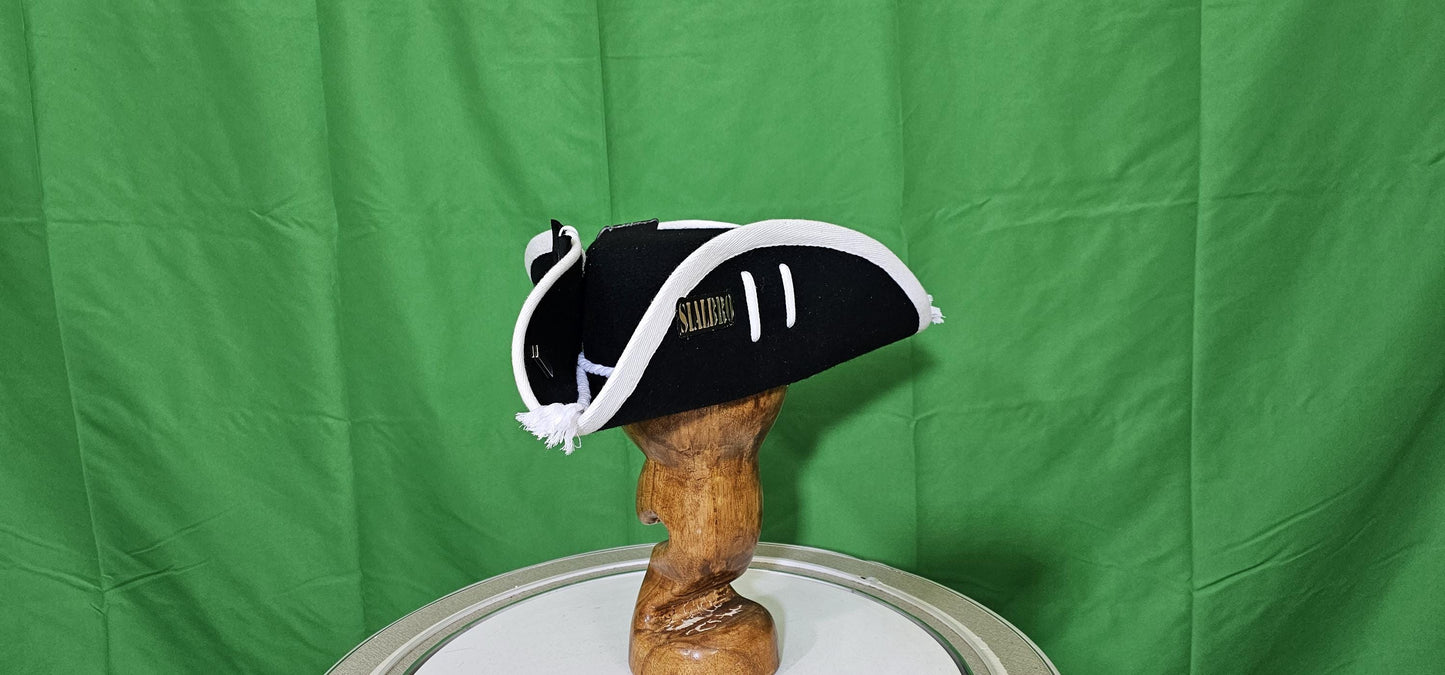
During the late 17th and 18th centuries—culminating in the American War of Independence (1775–1783)—the "cocked hat" (popularly known today as the tricorn) was the defining headgear for gentlemen, officers, and soldiers alike.
Far from being just a fashion statement, the cocked design served a brilliant practical purpose: by folding or "cocking" the brim upwards into three points, it acted as a natural gutter, channeling heavy rainwater away from the wearer's face and shoulders. The distinctive white wool binding along the edges was a classic military mark, used by both the Continental Army and European forces to identify regiments and maintain a sharp, uniform appearance on the smoky battlefields of Yorktown and Saratoga. By wearing this hat, you are carrying a piece of the very gear that shaped the birth of a nation.
Key Features & Specifications:
Authentic 18th-Century Design: Period-correct cocked shape (tricorn style) perfect for Revolutionary War reenactments, Continental Army impressions, and colonial displays.
Premium Materials: Crafted from durable, weather-resistant black fur felt for a soft yet historically accurate structured feel.
Handmade Detailing: Features distinctive hand-sewn white worsted wool trim along the brim, complete with an authentic black ribbon cockade, brass button, and side tassel.
Built for Comfort: Designed to sit comfortably and securely during active historical events, parades, or long exhibition days.
Versatile Collectible: An exceptional addition to military memorabilia collections, museum displays, or high-end costume wardrobes.
Why Choose SIALBRO?
At SIALBRO, we don't just make hats—we preserve history. Our commitment to using quality materials and traditional techniques ensures that you receive a museum-quality piece that looks just as authentic on display in your home as it does in a living history camp.